This page of the site contains the latest 10 articles to appear on bythom, followed by links to the archives.
Weekly News and Commentary for February 1-15
I'm transitioning all of my News/Views into a new format. For the time being, news will continue in this digest form on this site. Enjoy. (p.s. If you're interested in potentially subscribing to my new offerings, be sure to click here to receive further updates as that idea gets developed and closer to launch.)
--------------------
LEDE ON
Did the Chinese puncture the Japanese lens tire? The Japanese have a term, attachment rate, which defines how many lenses they sell each year per camera body. The attachment rate was within ±0.02 of an average of 1.67 lenses per body for 11 of the last 20 years. There was an understandable dip in the two post quake/flood years when production was constrained, plus an odd, short upward spike during the pandemic. However, from 2022 to the present there's been a strong and consistent downward trend in the attachment rate: 1.64, 1.61, 1.56, and now 1.51 for 2025. Not coincidentally, the number of prime lenses the Japanese have been selling during that four-year dip has also fallen, and mostly for full frame. Indeed, the drop is more dramatic when only looked at in terms of full frame (a 21% drop in four years). We currently have 55 full-frame Chinese prime lenses that are available for the Nikon Z-mount and even more for the Sony E-mount. While no individual Chinese lens seems to be stealing the attachment rate on its own, collectively the Chinese lens armada is deflating the attachment rate the Japanese camera companies have relied upon for so long. If the ~8% overall decline is really due to Chinese lens sales, that implies that the Chinese sold about 850k units, by the way.
——————————
Analysis
Republishing data is not the same as interpreting it
Once CIPA published their year-end results for 2025, it seems that—at least according to virtually every photo Web site—the big news was the resurgence of compact cameras. Yes, compact cameras went from 1.88m units in 2024 to 2.44m units in 2025, but it seems no one actually got around to trying to answer the question of why that happened.
It happened because the Japanese camera makers simply started making them again. The demand was always there (and there's still more demand than the 2025 numbers would indicate, probably something at least in the 3-4m unit range). The real reason compact camera sales withered starting in 2020 and continuing through 2024 has to do with the pandemic and parts availability than anything else. Each camera maker tended to deal with the supply chain problem differently, and the two that were the most extreme at that were Canon and Nikon.
Canon simply stopped making—but did not discontinue—compact models. Thus, you might have noticed in the last year (plus rumors for this year) that some Canon Powershot cameras are seeing resurrections (though not updates). To my knowledge, Canon never closed or repurposed factories the way others did. For instance, Nikon. Nikon did discontinue pretty much everything except for the top Coolpix models (P950, P1100, and for some reason, the P1000 still seems to be sold). There appears to be little prospect of other Coolpix coming back, though the jury is still out on whether Nikon might add a Coolpix model in the future.
Fujifilm had one of their biggest hits with the X100 in 2013, and the 2020 iteration (V) was the point where it really went viral, so they kept their production up despite parts shortages that hurt other model sales. They doubled down with the X-half and GFX100RF in 2025, too, at a time when most of the other camera producers were not investing in new models.
I don't believe the demand for US$1000-2000 compact cameras is anywhere close to being sated, as the Ricoh GRIV and Fujifilm X100VI backorders show (I've got a GRIV I'll be adding to my compact camera reviews soon). But I also believe there's room in the US$500-1000 space for a really competent compact camera, too, and that's not really being well served by anyone at the moment.
Let me go out on a limb and suggest that compact camera sales will again show dramatic "growth" in volume when the 2026 results eventually get published. How much growth? Not as much as the market demands, as parts shortages are still being triggered by the unavailability of fab time, plus most of the camera companies have made their design teams more lean. But with Canon back to producing Powershots, we'll see more units shipped in 2026 than 2025.
——————————
CP+ Announcement
Canon is first to announce
On Wednesday Canon announced two new RF lenses and a reappearance of a Powershot compact in the run-up to the CP+ show later this month in Japan.
▶︎ 14mm f/1.4L VCM. This new wide angle optic lists at US$2599 and represents an attempt to lock up the extremely wide, high optical performance prime position before the Chinese start sniping at the RF mount. Some of the early examples from the lens are astrophotography work, so I expect it to be well controlled in terms of coma and other deformities that show up in corners.
▶︎ 7-14mm f/2.8-3.5L VCM. And if you want to go more extreme—into the circular to rectilinear fisheye realm—Canon has a new US$1899 zoom that helps round out their high end zoom optics. At 7mm you get a full circle fisheye (at full frame), while at 14mm you get a 114° rectilinear view.
▶︎ PowerShot G7 X Mark III limited edition anniversary special. This US$1299 compact camera is a 20mp 1" sensor camera with a 24-100mm f/1/8-2.8 equivalent lens. So what do you get for US$400 more than the regular model? A new paint job, a fancier knurled front ring, and a little 30th anniversary (of PowerShot) mark on the pop-up flash.
-------------------
Wrapping Up
And in other news
▶︎ Petapixel isn't an economics site. Once again I have to point out that in their rush to get news out, Petapixel managed to produce clickbait headlines and statements. This time it was "Nikon Posts Big Losses and Cuts Projections." This, of course, always raises the social media negativity towards Nikon Imaging, even though they're not really part of those "big losses," the projection cuts were modest and likely the result of the delayed Z9II, and the group is not in any danger.
The primary source of those "big losses" for the whole company was a 90.6b yen write down against the acquisition of SLM Solutions to help create Nikon's new digital manufacturing business. Indeed, none of the 103.6b yen loss for the quarter was the result of lack of profitability of Nikon's primary businesses. Cash on hand, receivables, and inventories didn't really drop; what really dropped was 60.5b yen in "goodwill" that was on the books and 26.2b yen in intangible assets.
What that tells me is that Nikon was over optimistic in how they booked the original SLM acquisition. The write downs are mostly just saying that the 3D metal printer company Nikon bought in 2023 wasn't worth what they paid for it and then booked into their assets. Thus, this past quarter they wrote down their assets to reflect that. The actual cash long ago left the building. FWIW, get ready for a repeat in three months from Petapixel, as Nikon has already said they'll take another significant write down in the fourth quarter (again, none of it having to do with their biggest business, cameras and lenses).
In the fiscal news that is important to the photography market, Nikon Imaging is showing signs of a slowdown in sales (part of Petapixel's "cuts projections"). Foreign exchange rates and tariffs coupled with the fact that Nikon volume shifted to lower priced models due to recent camera updates is the real story. Overall, that means that Nikon is estimating that they'll still reach the same total sales figure by March 31st as they earlier forecast, but it will produce less profit by about a third. Since Nikon is also forecasting 50k fewer cameras and 100k fewer lenses, for sales to hit their new expected fiscal year result they need to sell more higher end gear and not give back more money via foreign exchange and tariffs. What that suggests to me is fewer sales on lower end gear and more on higher end products.
I do note that Nikon is going to slip slightly in market share for the year, but as I've already reported, the next generation of top end cameras has been delayed, and that's now starting to show up in the results. I believe Nikon originally thought that they'd drop the Z9II towards the end of their fiscal year (i.e. this quarter), which produced their original estimates. I do not expect the Z9II until this fall (in Nikon's next fiscal year) at this point, and even then it may be a development announcement first, followed by frantic testing to get it out as quickly as possible.
Nikon Imaging is fine. Not quite where management hoped it to be, but actually still on the path of the long-range forecast they made several years ago. But as I've written several times lately, early 2026 is going to mostly be about lenses, as I see no new Nikon camera ready to to hit any time soon. Frankly, that's fine by me as I'm still trying to catch up with the Z9 generation onslaught Nikon made in the past few years.
▶︎ Godox keeps it going. The perennial Chinese flash cloner has introduced the V1mid, a reasonably small round-headed US$179 flash unit with a built-in Li-ion battery. As usual, there's fairly full functionality (including hi-speed sync) with Canon, Fujifilm, Nikon, OMDS, and Sony specific models available. Also as usual, Godox refuses to publish Guide Number information, which is useful in determining which flash unit you might actually want. In fact, there are a number of "unprovided" notations in their specifications, as if this is top secret information that could fall into the wrong hands. All we know is that the V1mid is not as powerful as the V1. I guess the dox in Godox doesn't stand for documentation.
▶︎ Next week will get busy. The CP+ announcements start in earnest this coming week, so expect to see a lot more news and commentary coming shortly.
------------
As you can see, this weekly or bi-weekly "newsletter" style for News/Views can be quite elaborate and lengthy. But by putting everything in one spot less often, in a single format, it saves me time and allows me to spend more time on the commentary than the news itself, which you can get pretty much anywhere.
byThom MAX is still coming, but for the time being I'll be doing news this way. I'll have more about byThom Max when I kick it off later in 2026. In the meantime, if you're interested in subscribing, click here to receive updates.
Where Are We?
Another month has ticked by, and while it may look like the camera companies and I took the month off, nothing can be further from the truth.
Let's start with the camera companies. Nikon and Sony are waiting for chips (or perhaps just starting to get final chips and now working frantically to do final firmware work). I really don't expect any new cameras from either any time soon, though both have a number of lenses pending. Fujifilm and Canon seem to be targeting CP+ for their next camera announcements, so basically "later this month." OMDS and Panasonic seem pretty opaque at the moment to whatever it is they're up to. Leica is rumored to be sold.
From a GAS (gear acquisition syndrome) standpoint, the first half of this year seems like it will be mostly about lenses, with scattered cameras.
Here in the frigid Mid-Atlantic, I've been pretty much bolted to my desk between bouts of snow shoveling, ice removal, and occasional grocery store visits. My Priorities List seems to have grown to novel length, but I'm finally managing to shorten it rather than add to it. I wrote two books in January while working on three others. Technically, I wrote a third book, but it isn't on photography, so you don't care ;~). Since you haven't seen any of that work, you might guess that some of it has something to do with byThom Max (you'd be right). Meanwhile, I've been working on new designs for four sites, and am only really waiting for a final software update from the vendor whose product I'm using before I start the first deployment.
On top of that, I developed intro and outro bits for upcoming videos, started a new project on getting my computer storage updated (including new name conforming), cleaned out the old office to recycle a bunch of gear, and much more.
Reviews? Well, they seem to be as frozen as the landscape at the moment. Oh, I've done the lab work, I'm just waiting for a few days where I won't freeze my hands to the products trying to get a few additional images to look at. It doesn't help that my usual long-distance diagonal reference spot is basically just a panorama of white at the moment. White snow in focus kind of looks like white snow with spherical aberrations, if you get my drift (pardon the pun).
So bear with me (and the camera companies). We're all deeply at work, it's just not a time when you're going to see a lot of evidence of that. But come the thaw...
Weekly News and Commentary for January 7-16
I'm transitioning all of my News/Views into a new format. For the time being, news will continue in this digest form on this site. Enjoy. (p.s. If you're interested in potentially subscribing to my new offerings, be sure to click here to receive further updates as that idea gets developed and closer to launch.)
--------------------
LEDE ON
CES supposedly stands for Consumer Electronic Show, and last week we just had that annual extravaganza. Curiously missing were cameras. Unlike many previous years, we saw no new photography-related product launches from Canon, Nikon, or Sony. Nikon didn’t even have a booth. Curious about this, I decided to look up what CTA, the association that runs the show says about what things are covered at CES. Sure enough, no mention of imaging. Video is mentioned, but not Imaging. I guess we consumers have moved on from Imaging. Not so consumer topics such as AgTech, Quantum, and Space Tech seem to have been added. Not that anything particularly interesting came out of this year’s CES. Unless you consider things like adding AI to Catepillar tractors interesting. I guess we’re stuck with our 4K televisions and current cameras now.
——————————
Explainer
Triple Stacked Sensors
You’re probably seeing articles that mention triple stacked image sensors, specificallly in relation to Apple and Samsung. You may think that might mean something akin to the Foveon sensor, where three layers of silicon are examined to find (near) R, G, and B values for a single pixel. It doesn’t.
Triple stacked refers to PD-TR-Logic. The top-most portion (PD) is the photon detection and converstion to charge. The second portion (TR) is transport. This is still a bit of a nebulous concept as in the patents we see different definitions of what this layer can/should do. In its simplest form, it’s simply moving the charge out of the PD layer. Technically, a simple “stacked image sensor” as we have in Sony and Nikon cameras has a transfer layer in it, though this is at the moment it is merely connections between two independently created layers. In more complex forms that are being considered, TR is actually a communication portal between the PD and Logic layers. For instance, Nikon has demonstrated image sensors that let the logic layer to make changes to how the PD layer operates in 16x16 pixel blocks, though this sensor has not appeared in production yet.
The Logic layer is what it sounds like: this is where you start doing computational things with the data moving downwards in the stacks.
Many of the early posts about future Apple/Samsung chips make non-sensical claims about “better than Sony Exmor.” I’m sure that we’ll get image sensors in the future—all this triple stack discussion is about the future—that are better than past image sensors. However, the commentators making such claims also don’t seem to understand where current Exmor lives. The partial stacked sensors now coming out of Sony Semiconductor are actually a side idea of the thing driving straight triple stack: let the PD do its job, have on-chip methods of moving that data as fast as possible into the partial stack, which is essentially a logic addition melded to the basic image sensor via a unique method that Nikon Precision seems to have originated. It’s not stacked behind the PD layer, it’s mounted as a partial layer on top.
Two somewhat competing things are happening with traditional image sensor development at the moment. The first is the pursuit of bandwidth: speed up everything that happens post the actual photon conversion (starts with TR layer). The second is the pursuit of control/computation (logic layer). What’s driving this is not still photography (we don’t reallly need full image data at >30 fps), it’s autofocus and video. Current top cameras are sub-sampling focus streams at 120 fps, while video is pushing so much data now (e.g. 8K/60P) that rolling shutter becomes an issue due to bandwidth constraints.
Basically, image sensors haven’t been changing much in the PD section, which is one reason why you don’t see a lot of movement in dynamic range. But we have seen changes at the “edge” of PD, such as the dual gain output in the partial-stacked image sensors, which combine a second ADC read with faster bandwidth to get that data. As long as we stick to the traditional Bayer-type PD use, it’s the things that happen post photon conversion that will change.
One of the most likely scenarios for a full triple stack sensor is that it will apply AI noise reduction to the data before it gets to the image processing stream. But other possibilities exist, as well.
The bottom line is: we aren’t quite there yet, but we can see where we might want to go.
——————————
Commentary
Be careful what you think...
I continue to have to do cleanup for other sites.
▶︎ “Image Sensor With 26 Stops of Dynamic Range” Technology is very difficult to keep up with and fully understand. What tends to happen when the media doesn’t fully understand a new technology, they simply repeat marketing messages. Canon showed off a new SPAD (Single Photon Avalanche Diode) image sensor at CES, along with the claim of 156db dynamic range (which most sites did the conversion on and reported as 26 stops). We have two things to explain here:
Current image sensors collect photons over time (effectively shutter speed) and then count how many they receive. We refer to that as PD (Photo Diode). A SPAD sensor reacts every time it receives a single photon, so rather than collect photons—actually convert photons to electrons—internally in the sensor, the downstream electronics have to assemble the counts. The good news about SPAD is that it doesn’t have electronic read noise at the sensor, effectively an “avalanche” is a 1 and “no avalanche” is a 0. This absolutely improves data integrity in really low light, as only signal should be recorded.
However, the thing that the media never quite picks up on is this: photons are random. For the past decade our PD image sensors have been pretty darned good at recording the randomness of photons. Yes, there’s electronic noise in the lowest level of the signal, but as Nikon demonstrated more than two decades ago, three basic noise components exist, at with any technology one of them will dominate. We are in an era where randomness of photons is the dominate producer of noise. So however good Canon’s new SPAD is in low light data integrity, will all the extra dynamic range actually show up in photos? Not in the ways that 26 stops (versus or current 11-12 stops) suggests or the mainstream media intimates.
This is not to suggest that we won’t get single photon detection at some point in our cameras. Both Canon’s SPAD efforts and Fossum’s JOT designs are almost certainly going to be in our cameras at some point. But neither is going to remove the randomness of photons, so the overall impact in low light will be different than you think: not so much a noise reduction (randomness stays random), but more an improvement in data integrity. As most of you know, my mantra is “optimal data capture, processed optimally,” so I’m all for SPAD and JOT.
-------------------
Wrapping Up
And in other news
▶︎ Shapeshifter Shifts, Keeps Shape. ThinkTank Photo introduced two new Shapeshifter bags, the 25L and 37L. The basic premise of these bags is to avoid dividers and have you put everything in pouches (several pouches are supplied with each bag). This isn't the first time we've seen pouches in their bags. The two basic problems with this idea are: (1) you're almost certainly going to end up buying more pouches if your kit has to morph for different work, and (2) it's more cumbersome to get things out of and back into pouches when you're changing gear quickly, particularly if you use the drawstrings on the pouches to try to keep dust and other elements away from your gear. I tried the first pouch backpack ThinkTank Photo made (disclaimer: it was provided for potential review free of charge), but ultimately felt that the system was just not flexible enough. It's not clear that the new versions will be more flexible.
Those of you who've encountered me during travel will know that I use bags with dividers. However, while in transit I put all my individual gear components into really thin bags and slide those into the dividers. The reason for this is two-fold: modest protection from the elements and those dreaded Frankfurt "empty your bag" requests at their security posts.
▶︎ Apple goes subscription. In a bit of odd news, Apple announced a new Creator Studio product, which is really just a bundle of existing products coupled with some AI additions, available as a subscription. The standalone products will still be available as perpetual purchases, however now there's a new extended subscription option. The implication is that the perpetual products will go into near feature stasis, while the subscription versions will get extended more. Creator Studio includes Final Cut Pro, Logic Pro, Pixelmator Pro, Motion, Compressor, and Main Stage with along with "substantial AI features" for those products as well as Pages, Numbers, and Keynote. Price will be US$12.99/month, or US$129/year when they appear on January 28th (there's a one month free trial). Particularly telling is the offer to students and educators: US$2.99/month, or US$29.99/year. Given that it would take multiple years before either cost comes close to equalling what you pay for all the perpetual products, it seems well worth the cost to someone coming new into Mac and iPad content creation, particularly students. What's unclear at present is whether those of us who own those products already would really get any real value from the "substantial AI features." Those features are locked if you don't have a subscription.
------------
As you can see, this weekly or bi-weekly "newsletter" style for News/Views can be quite elaborate and lengthy. But by putting everything in one spot less often, in a single format, it saves me time and allows me to spend more time on the commentary than the news itself, which you can get pretty much anywhere.
byThom MAX is still coming, but for the time being I'll be doing news this way. I'll have more about byThom Max when I kick it off later in 2026. In the meantime, if you're interested in subscribing, click here to receive updates.
Weekly News and Commentary for January 1-6
I'm transitioning all of my News/Views into a new format. For the time being, news will continue in this digest form on this site. Enjoy. (p.s. If you're interested in potentially subscribing to my new offerings, be sure to click here to receive further updates as that idea gets developed and closer to launch.)
--------------------
LEDE ON
Get ready for the congratulatory back-patting. The first read I got from reliable data sources was that holiday camera sales (dollars) were probably up between three and four percent. This is consistent with overall holiday sales reported by Adobe’s marketing group and Mastercard, so believable. No dealer has told me they had a great selling season, but none are also complaining about a slump of any kind, either. CIPA just dropped their November report, and it shows mirrorless up 11%, DSLR down 29%, and compacts up 29% for the year. For all cameras together, the year through November was up 10% in volume, up 6% in yen. Given that Canon and Sony both dropped significant products late in the holiday season, I expect December’s numbers to be better than last year, too, at least in terms of yen value.
Growth is growth, of course, but the camera industry still isn’t hitting it out of the park, though all the on-line celebrations might have you thinking that. What we have in 2025 is another small step back from the bottom.
——————————
Commentary
Silly Season...
It’s the time of the year when looking back and looking forward seems to generate gunk.
▶︎ “We’ve built an intelligent photography assistant [WayShot] that empowers anyone to master composition, lighting, and framing in real time.” For only US$9.99 a week you can have AI tell you how to make your images look like professional ones. Only one thing wrong with that notion: AI is pattern matching and backward looking. Which means your images start to look those that already exist and get boring. Folks, read your Susan Sontag: great imagery stands on the shoulders of those that came before, it doesn’t try to build the same shoulders. And just two articles away (these quotes both appeared in PetaPixel): “…that feed is dead,” says Instagram head Adam Mosseri characterizing what all that Instagram style copying already being done has accomplished. And a note to PetaPixel: Really? You can cover an individual story but you can’t actually put the pieces together for people reading your stories? Tip to readers: continue to try new things, don’t be afraid to experiment, develop your own style, cover and create a story in your compositions, and all the other things I’ve been telling you to do over the years and your images will continue to stand out from whatever AI and Insta are doing. Copying is for Kinko’s.
▶︎ “Nikon ZRc, Nikon Z500, Nikon ZFC II and Z30 II Specs & Release Rumors Revealed by Matt” [headline on The New Camera]. Let’s start with Matt Irwin, the supposed source of these rumors. What Matt actually said is “I expect…” What he “revealed" is simply what he believes Nikon is (or should be) working on. This was more a DX wish list on Matt’s part than actual information. But here we see exactly how AI scraping and sloppy restating happens now on the Internet, including The New Camera’s headline. Rather than point you to the original video or the Web sites that are now regurgitating Matt’s thoughts in various exaggerations, here’s what Matt “expects”: (1) ZRc with 26mp partially stacked DX image sensor, (2) Z500 with 26mp stacked DX image sensor, (3) ZfcII with 26mp stacked DX image sensor, (4) Z30II with non-stacked 26mp DX image sensor.
Sorry, Matt, but that’s three different new DX image sensors, and I just don’t believe Nikon would do that to themselves. It’s too costly for the DX purpose in life (as an introduction to the products Nikon really wants to sell you). I’m already on record as saying that we will get a ZRc in 2026, but it’s not imminent (Matt does say 12-18 months out, which is 2027). It’s possible a ZRc would introduce a new DX image sensor, but then I’d expect that single new sensor to be what Nikon uses in almost all future DX models, which are a fair ways off. Using any kind of stacking and EXPEED8 in future DX models also pushes them higher in cost, too, which starts to defeat the purpose of DX. Most things in Nikon DX have to fit underneath the Z5II price, or else they make little sense. Clickbaiting is very much alive in 2026, and is probably going to get more prevalent as CPMs (cost per thousands) for ads continues to drop, affiliate income drops, and other sources (e.g. AI agents) start trying to get in the game.
▶︎ “The Sony A7 V Debuted Higher on Sales Charts Than the Canon R6 III” [PetaPixel headline]. I continue to see photography Web sites making authoritative statements from poor data. The problem with using a one-month (or less) Japanese metric is simple: the media outlet making the statement is not understanding distribution patterns that basically distort that short term data. You can see the hint about this in the CIPA data if you look closely. Shipments of mirrorless cameras to Japan in November were 81% of last year. What I’ve seen happening in the broader data is this: Canon, Fujifilm, Nikon, and Sony all regionally target their distribution of new products. Any product in short supply tends to be mostly placed where it is expected to have the most impact. Not surprisingly due to economic conditions in Japan, Japan is often not one of the primary distribution targets. In the mass media I’ve run, we referred to this type of article as “shovelware.” It appears to say something, but doesn’t. Indeed, if you read down that article you get the disclaimer “It is possible the R6 III sold more total units in November than the A7 V did in December, despite the A7 V finishing higher on the charts.”
--------------------
Tip
How do you know it’s better?
A common problem arises with technology products: they iterate generation after generation, and as a product becomes more and more sophisticated it gets difficult to tell how it is really better than what you’ve got. This is not a technology problem, it’s a marketing problem.
Marketing is about communicating the value of a new product to potential buyers and getting some of those buyers excited because the new value would change something important for them.
Before I go on, let me be clear. We do get big changes in technology (or more likely, combinations of new technologies) every now and then, and when that happens the advantages are clear even with the worst of marketing.
You might have noticed that early on in Apple’s marketing of their own processors for Macs, that they spent a lot of time showing charts that basically said “uses far less power, works far faster.” Hey, that sounds like something I’d want! You’ll also notice that Apple doesn’t lead with that story any more with the latest generation of Apple Silicon. Yes, each generation of the M chip still uses less power and works faster, but you’ll see that Apple has shifted much of their marketing message to other things. Unfortunately, those other things have turned out to be lame (e.g. Apple AI, LiquidGlass UI). Moreover, most users are still trying to make clear use of all that faster bit on the older model that they opted for along the way.
With cameras, we’re deep into the same problem. Yes, the focus system works a little better, there’s less rolling shutter, maybe even a bit more dynamic range at base ISO, but we’ve been getting that same thing for several generations of cameras now, and the marketing buzz any of those items might create is starting to wear off.
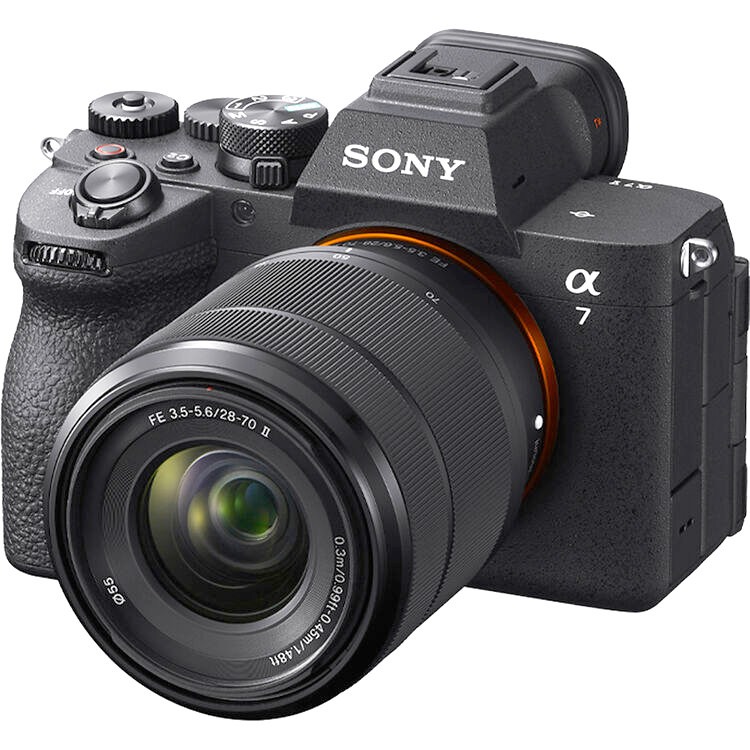
I notice that Sony is touting their most recent camera this way: “Designed with innovations that deliver a significant performance boost across every aspect of imaging.” The claim that’s new here is “across every aspect.” Sony’s marketing department is letting you do the heavy lifting: whatever it is you wanted a boost in is present in the new camera. Sure. But not more pixels. Or a better EVF. (I could go on. ;~). And as usual, Sony’s press materials had 22 footnotes, many trying to explain the details of those boost claims.
The problem, of course, is that the A7 Mark V looks pretty much the same as previous A7’s, so whatever marketing claim you make to get someone to buy one over the A7 Mark IV you’re still selling need to clearly resonate, otherwise the customer will just save the US$400 in price and walk out of the store with the IV.
This is one reason why the camera companies’ marketing departments believe in numbers (30 fps versus 10 fps [with a footnote ;~] in the A7 example). Note what I wrote when the new camera came out: "should you upgrade from the Mark IV model?" If you're a casual photographer who doesn't press their camera to the max, the answer is a fairly clear no.”
You may also have noticed that Nikon didn’t even say anything about the recent ZR camera as regards still photography. All the marketing was about the RED connection, and most specifically about the changes that R3D raw makes. The ZR is indeed the best 6k video camera at under US$4000 (and maybe higher) when used the way Nikon marketed it: 32-bit floating audio with clearly better looking video output that grades easily. But as a still camera? I think Nikon was afraid of saying anything about that because, ostensibly the ZR as a still camera is a Z6III with some features removed. Does that make it bad for photography? Nope. Z6III level imagery is all most people actually need. I’m so convinced that the ZR is a very usable still camera that I’m working on a Conguring and Using the ZR for Still Photography book. So I guess I’ll do Nikon’s marketing job for them.
Time to get to the tip: how do you know the new thing is actually better? The marketing departments of the Japanese companies are not exactly top explainers, so the answer to that question boils down to two things:
- Knowing your needs, understanding your frustrations. Do you need the iterated things? Will they provide a clear benefit that addresses your needs or fixes your frustrations? Maybe, but only you can figure out the answer to that with clear self assessment as well as clear information about the new product. I can help with the latter, but you need to the work on the former.
- Believing the influencers. This is where it gets tough. Those that get early access to products these days tend to be “cheerleaders of the latest.” That’s because of how they get compensated for their time. Some manage to still give you clear, useful, and reliable information instead of hype. You can probably count those in the mirrorless arena with the fingers on your hands. However, know that the camera companies are prioritizing influencer reach over reliability these days. They’d rather give early access to cheerleaders with huge followings than serious assessors with smaller followings.
Yes, I consider myself an “influencer,” though not in the common definition of that term these days. My articles, reviews, and assessments are valued by many, so much so that when I post a detailed review B&H’s sales for that product clearly go up for the next week or two. But I’m hoping that this is because I’ve provided the information you needed to resolve whether the product is going to meet your needs or solve your frustrations.
-------------------
Wrapping Up
And in other news
▶︎ FoCal 5.0. This tool used to automate AF-Fine tuning has just had a complete overhaul, promising faster and more precise results as well as more reliable WiFi and Ethernet connections to the camera being tested. The UI has been tweaked with a new look and a smoother approach, and the reports generated by FoCal have been improved, as well. You also get FoCal Mobile and Snapshots when you have an active FoCal 5.0 product. As many of you know from my earlier writing, Snapshots is one way around the limitations of Nikon’s Save menu settings limitations.
▶︎ OWC Envoy Ultra 8TB. The portable Ultra SSDs have been availalble in 2TB and 4TB sizes for a while, and they are the fastest bus-powered portable drive you can attach via Thunderbolt 5. At CES, OWC announced the 8TB version, which, unfortunately, at US$1700 is two-and-a-half times the price of the 4TB. Still, if you need attached max speed storage on a current MacBook Pro, you might be tempted.
▶︎ macOS Security. I’ve added a section to my article on Macintosh Software (it’s at the end of the article). This is an important subject you should never neglect, as Macs are definitely targets of malware and other malicious threats these days. If you’re the geeky type, you should read this year’s summation of Mac threats. Yes, a lot appeared in 2025. And the most common denominator is that they’re trying to steal information from/about you. And lest you think this isn’t really photographically relevant, I tracked at least two threats to photography Web sites this past year. That’s down from 2024, but still, any site that’s running ads is vulnerable to hidden attacks within the ads.
------------
As you can see, this weekly or bi-weekly "newsletter" style for News/Views can be quite elaborate and lengthy. But by putting everything in one spot less often, in a single format, it saves me time and allows me to spend more time on the commentary than the news itself, which you can get pretty much anywhere.
byThom MAX is still coming, but for the time being I'll be doing news this way. I'll have more about byThom Max when I kick it off later in 2026. In the meantime, if you're interested in subscribing, click here to receive updates.
Is it byThom MAX Yet?

No.
However, you'll begin seeing changes across all the bythom sites starting today:
- The sansmirror.com site is now officially mothballed. You can read about the why and what of that on sansmirror.
- The dslrbodies.com site has had a cleanup. I don't expect much happening in the DSLR space, but I've done work to keep it ready for what happens in 2026. It’s also possible that as I have time, I’ll pull some older material back up and update it (e.g. older camera and lens reviews).
- The filmbodies.com site is being revised and will soon sport a new bythom look and design. Coverage on that site will be limited to Nikon film SLRs and film or accessories that they use. Every page has been rewritten. New things will appear! I don't expect filmbodies.com to be a site with very many new posts in the future, but I've been using it as a testing bed for things I'm considered on the other remaining sites.
- Advertising has been removed from all my sites. I'm still working on finding many embeds, particularly for random Amazon affiliate links that I've used at times, but the goal is to make all my sites tracking free in any way that I can. What you do while on the sites will remain private.
Next up will be more re-work on the books, including a site dedicated to books with much more information as well as better presentation. As you may be aware, I just completed a massive set of updates to existing Z System Books. But I still have two books that need updating (Zf and Z9), and there are several additional books coming in the near future.
I'll have more to say about changes and the eventual byThom MAX as things progress. However, this has turned out to be a massive process in order to up the quality and look of virtually everything I produce, so it's taking time to get it right (or at least nearly right enough to reveal).
For the time being, things will continue on bythom.com, dslrbodies.com, and zsystemuser.com as before.
/picks up guitar and shifts to gravely voice...
Come gather 'round, people, wherever you shoot
And admit that your images could use a reboot
Accept that soon you'll be reading new tome
If your time to you is worth saving
You better comprehend or you'll sink like a stone
For byThom it is a-changin'
Weekly News and Commentary for Dec 3 to 31
News will continue in weekly digests for the time being, though I might slip to bi-weekly for a bit as I work on all my other projects. More information about a possible transition in how I handle things is here.
--------------------
LEDE ON
Now that the camera makers have finally figured out there really was a demand for compact cameras (CIPA's numbers show the rise in shipments pretty clearly), they now need to figure out what to do about that. The decline during the teens in overall camera sales (extended temporarily by the pandemic) had everyone shutting down factories, consolidating facilities, and writing off assets. To the point where today every maker is pretty lean in terms of their ability to ramp up more models and more shipments. Even market leader Canon shut down a key factory in China and huddled all their wagons in Japan. Now, it appears, they're ready to dip their toes back in the compact pool water. But rather than open up new facilities, Canon says they're exploring going factoryless (facfree?) and have started looking have others build their low-end products. Why? It's all about who's investing the money. Rather than invest it themselves and risk some day having to write those investments off again, Canon is seeing what Apple, et.al. have been doing with production and are now understanding why there's a key advantage to that when demand shifts. Ironically, this is where we started, as many of the camera companies outsourced their compact lines to various vendors (e.g. Sanyo) in the early digital days. I call this facfree system as "toe in the water." Look for more toes to follow Canon's.
——————————
REMEMBER
SETUP > Copyright information > Copyright > Copyright 2026 Your Name
--------------------
FAILURE TO LAUNCH
The Holiday "Quiet"
As you'd expect, since my last news/views compilation we haven't had a major camera launch of any kind. Sony was last to the podium with the A7 Mark V on December 2nd, which is about as late as we ever see new cameras in a year (Leica's SL2-S on December 10th, 2020 was the most recent significant late launch).
Even November—e.g. Canon's launch of the R6 Mark III this year—is considered late. I'm pretty sure neither Canon nor Sony were saying to themselves all along "let's target the last two months of the year."
The issue is shelf stocking. Traditionally dealers use up all their cash earlier in the fall building inventory for holiday buying season. By early November, their shelves (and back rooms) are full of what they need to sell in the last six weeks of the year in order to stay in business. Committing more cash or diverting sales from what they already paid for is counterproductive for them. So when your dealer sold you a R6 Mark III or A7 Mark V during the holidays, they may have been smiling on the outside, but they were probably grimacing internally ("Can I interest you in a lens to go with that?").
I'm aware of at least two products that apparently were initially going to launch in Nov/Dec, but either because of production delays or second thoughts, have now moved into 2026.
From a product management standpoint, you really want rumors to fly in September for an October official launch. Why? Because by launching in October you have "buzz" going into the holiday shopping seasons, and by doing the things necessary to get dealers ready September is early enough to get them adjusting their buying. Any later than that and you risk hurting those that sell your product.
What Sony's December launch tells me is that Sony is running a little scared. Or is behind in their scheduling. Or both. Launching the A7 Mark V in December instead of January is an attempt to protect sales from going to the newer Canons and Nikons (and maybe even Panasonics). The A7 Mark IV, after all, was over four years old (and was launched in the more correct October window ;~). Indeed, what else really was new from Sony this year? (RX1R III and FX2). So without the new A7 it would look like they were standing in place against the competition in the key mid-level category.
However, I doubt that launching in December sold them any more A7 Mark Vs than they would have had they simply waited until the CES/Imaging shows in January. Sony was trading "make news first" (January 2026) for "make news late" (December 2025). To me, that's a sign that Sony is feeling the pressure now from the others, and their market self-esteem is slipping.
Canon's situation seems a little different. In the past they've been pretty solid in keeping to no later than a September/October launch window, so I'd guess that the R6 Mark III had some slight hiccup in getting produced that pushed it a month back from where Canon would have liked it to be.
--------------------
RUMORS
What's Coming?
The last few launches of last year of course bring us to what's going to happen this year?
In terms of shows that you might want to make a splash at, CES starts January 6th, Imaging USA starts January 11th, CP+ starts February 26th, and WPPI begins March 1st. I'm not hearing much that would indicate significant January launches (other than perhaps lenses, of which several are pending). We also have the Winter Olympics opening on February 6th. All this makes the late January, early February time frame the right one to be popping significant major camera announcements into, though I expect some of those might be Development Announcements.
I'm betting that this year's CP+ in Japan will be the real focus for the next set of significant launches. First of all, CP+ had a really successful 2025 show and is already set up to be bigger and splashier this year. It's a home show, which makes announcements a little more in control of corporate. And it's the right timing to set up the next fiscal year for all the companies (except Canon, which uses calendar year). Unfortunately, my schedule keeps me from attending CP+ this year, and the couple of key meetings I've already got scheduled with camera company executives don't happen until April, so I'll be reporting from afar for most of the early year launches.
No, I'm not going to speak to specific products. I do know about three or four that are in the upcoming launch queue, but I'm going to respect my confidences here. Moreover, it's somewhat easy to product the "what" (but not the exact "when") for existing lineups. For instance, two of the oldest cameras in Canon's RF lineup now are the R7 and R10, for Nikon it's the Z30, while for Sony it's most of the APS-C lineup other than the EV's. (Hmm. All APS-C. Are we going to have a crop sensor year ahead?) Look closer and you can find cameras less than three years old that could use a little modest refreshing.
But the big anticipation is really about "new generation." For Canon, the question is how will future R1/R3 changes impact the rest of the lineup, and when will those come? For Nikon, everyone on the planet seems to know that EXPEED8 and the Z9II generation must be about to kick off. Sony has the A9 Mark III (global shutter) and A1 II (more AI and tuning) having iterated recently, so it's unclear if we're near anything new from them. Partially stacking the image sensor (Nikon, Panasonic, Sony) seems to be a thing now, and we're likely to soon see piggy-backing (e.g. memory mounted on ASIC), so there are plenty of cameras that might benefit from a stack or two.
Here's my problem: cameras are getting much more complex while making only small incremental image gains. Personally, I'm all for any gains and have always lived at the far front edge of tech, but I'm beginning to wonder if that's really going to amount to anything for the majority of the user base. What can't a Canon R6 Mark III, Nikon Z5II/Z6III, or Sony A7 Mark V do for you? Are you really printing larger than 20"? Do you really need >11 stops dynamic range? What do you need more than 15/20 fps for?
To me, the thing that's missing is the compact camera that's about at the level of those mid-range mirrorless cameras. In other words, the Canon PowerShot R, the Nikon Coolpix Z, and the Sony Cyber-shot A. Not R, Z, or A in terms of lens mount, because there wouldn't be one, but R, Z, and A in terms of imaging basics, something in the 24mp stacked range with a solid lens up front and a state-of-the-art ASIC behind. Some of you will say "Sony RX1RIII," but no, that's a camera positioned well out of the league of what people actually want. We're talking things that should live in the US$1000-2000 range, where only Fujifilm and Ricoh currently live.
Which brings me to "surprises." If any year needs a couple of surprise cameras, it's going to be 2026. Fujifilm, Nikon, OMDS, and Panasonic all need one if they want to make clear inroads on Canony. At the moment, I'm not aware of any such upcoming surprises, but of course, that's why they'd be a surprise!
--------------------
ANALYSIS
Who Needs What?
I didn't do a year-end report card for the camera companies this year, but everyone except OMDS got a passing grade and is moving on to the next level.
That doesn't, however, mean that everyone is well prepared for that level.
- Canon — Canon’s lineup still seems a little unsettled and random to me. They’re trying to achieve "everything for everyone”, but I believe that comes at the expense of lineup confusion. It’s not that Canon needs any specific new camera, it’s that Canon needs marketing that clearly tells people which product is for them. My fear is that they just keep making confusing product statements. The presumed R7 Mark II could be one of those, as it may say “don’t buy an R1 or R3.”
- Fujifilm — Fujifilm made some big moves in 2019 and 2022 (100mp GFX and 40mp APS-C, respectively, plus a Nikon D500 replacement candidate in the stacked X-H2s with the latter). The question I have is “so what have you done lately?” The answer, of course, is that they used those big moves to start re-aligning all their product line. That’s pretty much done now, so the question really is where does Fujifilm go next? I don’t know, but 2026 (or no later than 2027) really needs to contain the next big Fujifilm move. My concern is that they’re spreading a modest sized engineering team across a lot of models now, and some of those didn’t quite resonate the way their big moves have (e.g. X half, GFX100RF). The X-Pro4 or some other clear technology statement is what they really need next.
- Nikon — Nikon just did something fairly remarkable: via product updates and new launches, they've built out an entire generation of cameras that are really complementary with all having (mostly) the same feature/function sets (Z50II, Zf, ZR, Z5II, Z6III, Z8, Z9). Conspicuously absent in that list are Z30 and Z7II, so it's not difficult to say that it's time to complete the puzzle (e.g. Z30II and some form of Z7III). That Z30II will almost certainly show up, though probably as a ZRc, though, given the ZR's success. So what Nikon actually needs that none of us yet have clear information on are the Z7II replacement and the launch of the next generation of cameras through a pro body upgrade (e.g. Z9II). The good news is that, from everything I can see and what I'm told that I can't repeat, Nikon has a good handle on all of the above. Which leads me to this: the thing that no one is talking about at the moment is "the next surprise." I'm certain there will be one. Nikon is a company that, while maintaining their primary product line, has launched wave after wave of surprises over the years (Coolpix, Nikon1, KeyMission, and even the RED acquisition). So what do they have in their pocket for the next one?
- OMDS — This one is simple: OMDS needs to prove that they can launch something that didn't originate in Olympus (or Sigma ;~). This spin-out is trending towards becoming the next Pentax, a company that mildly iterates on what's been done and not much else. The fact that OMDS is still losing money—they call this "increased their profitability," which is a euphemism for "lost less money”—is a bit of a problem. I've written it for some time: they should have made an m4/3 Tough. They need that unique product that says "only we're doing this." Instead, what they've been saying since the spin out is "we're still doing that.” Okay, we get it, you can still produce what you’ve produced; tell us what’s next.
- Panasonic — I'm looking forward to meeting with Panasonic execs at NAB this year, because I'll be asking them the same question I asked them at NAB in 2016: "how do all these pieces fit together coherently?” Canon’s answer is one mount for everything. Nikon’s answer is one mount for everything. Sony’s answer is one mount for everything. Panasonic’s answer has been we've got a lot of mounts. I don’t think that flies long term. Even just two mounts is a tough sell these days. I really need a better answer from Panasonic, but am not expecting one.
- Sony — Sony is now in Nikon’s old position (#2 in the ILC market). But that’s under pressure from both sides, just as Nikon was in the teens. Canon just wants to sell to everyone, and is now back in the number one position with their historical near-50% share. Nikon (and to a lesser degree Fujifilm) are nibbling their way upwards. Where’s all that market share growth coming from? Sony’s loss of share. There’s nothing really wrong with any of Sony’s current offerings—though the APS-C gear is getting long-in-tooth—but it feels like “only Sony can do this” is no longer a supportable statement. The fact that Sony is keeping so much of their older generations on the market also seems to tell me that they don’t have a clear idea of how to compete in the lower cost models without just milking the cows until they are dry. While some might say that they want to see Sony’s next generation technology, I say the opposite: I’d like to see Sony show how they are going to compete in the US$700-2000 market with new products, and products using some of their best technologies, not simply stamping out more of the old.
--------------------
COMMENTARY
Second Warning
Back on November 16th I warned about prices rising on storage. I hope you bought what drives, SSDs, and cards you needed during the holiday rush. Because what's happening behind the scenes right now presages both shortages and price increases moving forward.
In particular, primary memory supply is seeing huge cost changes as two of the key semiconductor suppliers (SK Hynix and Micron) are directing much (most?) of their production towards AI uses and data centers. Indeed, Micron is shutting down Crucial, their consumer wing, in February. That means no more consumer-available NVMe, SSD, or DDR5 from one of the better sources. Behind the scenes, I'm now hearing from panicking execs at storage companies on what their future parts supplies and costs look like.
The good news is that there's still a strong existing stock on dealer shelves at the moment, some of it even with some discounts still available. I just don't know what's going to happen when that inventory runs out and the card/SSD/drive/memory suppliers have to build new product. It's possible that some will think this is a temporary situation and eat some of the costs to keep market share, but I suspect that everyone's in the same position and thinking they'll need to start raising prices.
Of course, tech goes through waves. Right now we’re riding the AI wave and that’s causing the memory demand that’s impacting supply. But a burst of the AI bubble could produce the opposite as companies look to offload memory to other non-AI buyers. Still, short term the news is not looking good. So if you’re in the market for memory, SSDs, or cards, buying now is likely to be better than waiting.
--------------------
TIP
SSDs seem like a “safe” way to permanently store data. People believe they’re less likely to fail than a spinning hard drive after long storage. That’s simply not true. Both spinning drives and solid state drives have issues with long-term cold storage (cold storage being where the drive is disconnected from the computer and power and stored somewhere).
With SSDs the problem is cell errors. Cells can have get error correction issues or just weaken over time. One small scale experiment showed that some SSDs can show signs of corruption after two years of cold storage.
If you’re going to store image data on SSDs, you should periodically power them up. Good solid-state storage has self checks and load rebalancing as it sees errors arise, but they need to be powered to do that. Something that parses all the files on a stored drive should trigger those built-in corrections. But if you want to be fully secure, you should create checksums for all files and folders and verify that they have not changed for your important files. That’s a massive task, even with good software.
Don’t panic. Nothing’s new here. Just like paper degrades over time in storage, so do most other forms of storing information. They all have weak points. My method of dealing with this is to fairly aggressively move data from one medium to another over time. For instance, my archived files get updated to new media about once every two years. It’s a big, full day job doing that and making sure I’m not just copying corrupted files, but since I started doing that I haven’t yet (knock wood) lost anything.
Mac users can create checksums using EagleFiler, and use those for verification by the program. There are other options for that, but that’s the one I’ve used in the past.
--------------------
Wrapping Up
And in other news
▶︎ No longer up in the air. Beginning December 23, 2025, DJI and all other foreign-made drones were effectively banned by the FCC. Imports of new foreign drones (and parts for them) will be completely halted, though any currently still on dealers' shelves can be sold, while ones already owned can still be used. The reason for the ban? "Unacceptable security risk."
Of course, your local police, rescue, and press may continue to use their DJI and other drones already in place, so unfortunately what we have here is just another postering of Security Theater by the US government. Moreover, the current government doesn't seem to understand how things actually work. Apparently, this ban will help lead to a rise of "American drone dominance." Not without batteries made in China, it won't. Or other parts, as well.
Protecting citizens from the "fear something we imagine could happen" is quite a bit different than protecting them from "things that are happening." Congress asked the government to do a security audit on DJI and others to empirically determine whether or not there were security threats built into these products (e.g. could be controlled via a backdoor from overseas, could report sensitive information, etc.). This bipartisan Congressional action, like many others, was ignored. The document giving authority to the ban is effectively an Executive Order by the White House.
I guess it's time to for someone to write a book entitled First They Came for Our Drones.
Yes, this is political. However it's important to understand that sometimes politics spills over into things like the photography business this site covers. From the beginning, drones have been controversial because on one side they allow individual liberties to be pursued while on the other hand they can disrespect privacy and cause safety issues. There was never any doubt that we'd have to come up with policies that balanced those things. However, we are way out of balance now. Moreover, my local police are asking what they're going to do when their current drone breaks, so "security" has more than one side to it, folks.
▶︎ Some ZR LUTing. As I work on my review of the Nikon ZR, I became aware of some third-party LUT tools, specifically Cinema Tools ZR Utility LUT, which has several really useful exposure tools built into it, but their full LUT pack for the R3D NE files the ZR can create. Besides a straight 709 LUT (good for broadcast material), it also includes an Arri Alexa matching LUT, which is very Hollywood. There’s more to the package than that, but the two LUT packages Cinema Tools makes have proven to be very useful getting the best video out of the ZR that I can.
------------
As you can see, this weekly or bi-weekly "newsletter" style for News/Views can be quite elaborate and lengthy. But by putting everything in one spot less often, in a single format, it saves me time and allows me to spend more time on the commentary than the news itself, which you can get pretty much anywhere.
byThom MAX is still coming, but for the time being I'll be doing news this way. I'll have more about byThom Max when I kick it off later in 2026. In the meantime, if you're interested in subscribing, click here to receive updates.
Things I Discovered Updating Sites
As part of my usual year end work on my Web sites, I noted a few things along the way:
- There are over 10,000 pages across the various byThom Web sites.
- There were over 5000 specific ads and affiliate links on those pages (plus the B&H ad that appeared at the bottom of every page). These have now been removed.
- Over half the mirrorless lenses announced and documented on the sansmirror.com site are no longer available (making sansmirror one of the few sources where you can still find specs for them). Some of this is obvious, as the Canon M, Nikon 1 (CX), Pentax Q, and Samsung NX mounts have perished. Still, there were quite a few surprises of XF, m4/3, and FE mount lenses that have gone away and are now only available used.
- Sigma favors FE/L mount while Tamron favors FE/Z mount. No one (other than Canon) tilts RF mount.
- No one seems to have noticed that I added RED cameras to the zsystemuser.com site (just the bots seem to be hitting those pages).
- While the site readership stats remain about the same for 2025 as they did for 2024, overall site traffic over doubled. Why? AI bots. Including ones that are ignoring several "no crawl" directives. So many companies are so afraid that they're going to miss the AI "revolution" that they'll just greedily scrape anything they can find so that they can fill their servers with ammunition. I'll make the prediction now: we're not going to have many winning companies out of the AI push. Most investments being made behind the scenes cannot be made back in profits down the line (if they could, you'd in aggregate be paying trillions of dollars to just access AI in the future). Moreover, I'm seeing a lot of circular-dealing going on (I'll invest/buy in/from you if you invest/buy in/from me). The big (e.g. Google) will get bigger, most of the newcomers will get acquired or go away.
- SEO (search engine optimization) no longer works anywhere near how it once did. You're getting steered by only a few companies now (and steered to only a few select places that won the bidding), and AI is going to make that worse. Revenue from ads and affiliate links probably won't be enough for most sites to survive.
Advice to New Users
It's the start of the new year, and pontificators such as myself are spreading advice as if it were road salt on winter roads.
But one question that came up several times during the holiday season that actually is worth getting on a soapbox for is this one: "I'm looking to buy a starter kit for my son/daughter looking to get into photography/video. What do you recommend?" (The other variant of this question comes directly from someone just finishing up college and looking to equip their gear closet for the future.)
I've got three answers to that question, the second of which is the preferred one:
- Budget friendly. Buy a Canon R8 or Nikon Z5 (or Z5II kit, but that starts to push out of "budget"). These are the best two entry models in full frame sensor size and a mount that will absolutely carry forward into the future. They are excellent starting points. They take great photos and create more than adequate video. Alternative choices: Fujifilm X-M5 or X-T30III, Sony A6xxx. But note that you're starting this person in APS-C and perhaps a mount that they won't want to be in later.
- Solid choice. Buy a Canon R6 Mark III, Nikon Z5II or Z6III, or Sony A7 Mark V. All are very recent models that have a ton of features stacked on top of excellent performance. These are cameras that are professional level and put you in a solid system with plenty of options for the future. They're reliable, well built, and have plenty of user customization and control options to mold them to the user's needs. Alternative choices: OMDS OM-1II if absolute portability is a factor in what they want to do, Panasonic S1II if they lean video.
- Only for the wealthy. Those with money to blow are going to consider pretty much any upper end camera: Canon R5 Mark II, Nikon Z8, Sony A1 II or higher from the primary makers. But this is also where Fujifilm GFX, Hasselblad, and Leica all play, too, and perhaps sensor size or luxury brand label will distract them.
Okay, sure, but which brand? That's actually the real loci that needs to be considered, not so much the actual model, as model gets determined by budget most of the time. This is actually the toughest decision one makes in first coming into the camera market, as it determines a lot.
Let's get one thing out of the way, though. Canon, Fujifilm, Hasselblad, Leica, Nikon, OMDS, Panasonic, and Sony all make incredibly competent systems cameras these days. All have proven they'll hang through tough times, so they're not going to go away. Further, I'd challenge someone to look at a photo or video from current cameras of any of these brands and be able to pick out exactly which brand it was. We are in a world where pretty much everything you can buy can create a 20" long axis print that looks amazing, as well as record 4K/60P video that is as good as most screens can display. Chasing small (and even larger) differences in dynamic range, pixel count, frame rates, and more is mostly now just absurdum studium perfectionis. Pros deliver high quality work every day from older <24mp and 4K/30P cameras. Someone starting out should be able to easily match or exceed that with all of the current gear that would fit into my Solid Choice category.
The real question becomes more about photography or video interests. Someone thinking they might pursue macro photography might benefit from a different choice than someone pursuing sports photography, wildlife photography, event photography, or portrait photography, for instance. And that's exactly where the real brand choice decision influencer starts to reveal itself: lenses.
When I get asked the question about starter systems, I ask questions about likely interests and intents, and I then lean my advice towards one brand over another based upon those answers, and a lot of that has to do with lenses. Over time, even that will become a bit of a washout between brands, as the lens lines fill out and third parties add options. But today there are still some important differences in wide angle, zoom, fast, macro, and telephoto options across the various brands that should be considered.
I'm not going to get into all the specifics in this article. If you need help on this, then drop me an email, and be as specific about budget, interests, and intent as possible and we can start a dialog to get you moving the right direction.
Holiday Time Off
The byThom sites will mostly go quiet for the remainder of December, though I'm still answering my email.
I've got a lot on my plate to complete this month besides celebrating, so don't expect anything new to be posted on the bythom, dslrbodies, filmbodies, sansmirror, or zystemuser sites until 2026 unless something big happens.
Weekly News and Commentary for Nov 24-Dec 2
At the end of the year I'm considering transitioning all of my News/Views into a single format. This is anticipated to be available only by subscription via a weekly email as well as a private site (see end of this digest for more). Don't worry, the rest of the information on my current sites would remain free.
To give you an idea of what that a weekly digest might look like, I've again taken the past week's news and built it into what this week's email would have looked like under this new plan. Enjoy. (p.s. If you're interested in potentially subscribing, be sure to click here to receive further updates as this idea gets developed.)
--------------------
LEDE ON
We hadn't even hit Cyber Monday (today) and we've already learned that holiday online sales are up 9.4% compared to last year. That's US$8.6b spent online on Black Friday (at least up until 6:30pm EST). This data comes to us from Adobe Analytics, a part of the big company you love to hate but probably weren't aware of, which provides statistical and marketing insights and advice to a wide range of big corporate customers. Adobe also made forecasts for the full Black Friday, the Black Friday weekend, and Cyber Monday, all of which they say will be up and perhaps to record levels, but I'll wait until next week to tell you if those guesses were accurate.
--------------------
TECH
And now we have a new term to learn...
As part of Sony Semiconductor's announcement of a new smartphone sensor (200mp!), we got a new term introduced into the mainstream (it's been around in the labs for awhile): remosaic. The current term for deciphering a Bayer (or even other multicolored filter) sensors is demosaic. The Bayer pattern (RGGB) is a mosaic of individual colors, so you need to decipher and interpolate that mosaic to get pixel colors, so de-mosaic.
Okay, so what the heck is remosaic? Well, according to Sony that's when you take a set of binned, adjacent same color photosites and create a faux Bayer pattern for the individual photosites. Let me explain. The new sensor uses blocks of 16 adjacent photosites all under the same color filtration, but arranges those blocks in a 64 photosite block that's effectively Bayer:
GGGGRRRR
GGGGRRRR
GGGGRRRR
GGGGRRRR
BBBBGGGG
BBBBGGGG
BBBBGGGG
BBBBGGGG
etc.
But we want
GRGRGRGR
BGBGBGBG
GRGRGRGR
BGBGBGBG
.etc.
To get that, we have to remosaic, which involves interpolating an individual photosite's implied full color values from adjacent and near adjacent real single values.
But wait, if you buy today...
Sony Semiconductor is also preaching remosaic using AI (as opposed to up/down scaling, which was done in the past). Yep, this new image sensor has an AI as well as an ADC circuit onboard to do your remosaicing for you (which ironically, still needs to be demosaiced).
Fortunately, Sony Semiconductor avoided using the dreaded and argued about "resolution" word. Their terms were "improved reproduction of details" and "better image quality."
But wait, if you buy today...
The thing most other sites that covered this picked up on was the hybrid HR system, which effectively combines a "short" exposure to a photosite with the "full" exposure to a photosite that's then handled by the ACD via a dual gain conversion and combination. What this does is give you a "preserve the highlights" set of data that is combined with the eventual "full capture" set of data. We've had variations of this combinatorial approach before, most notably Fujifilm's SR sensors, and we've had some simultaneous dual gain conversions recently (Pansonic's use of the partially stacked 24mp image sensor), but this is the first time we've seen it integrated at the photosite cell level, I believe.
What I object to are the posters claiming that dynamic range is extended using this technique (Sony claims over 16 stops). Realistically, the two exposures are being combined, so you're compressing an expanded dynamic range capture into the same final bits, and how you do that becomes very important, because the results are no longer linear, and totally under control of the image sensor technology. Previous attempts at this have all had a side effect of looking really good for some scenes, and less good for others.
--------------------
Camera
Sony completes the cycle
Canon, Nikon, Panasonic, and now Sony have now all introduced their sub-US$3000 model updates that bring a key older model into their current generation designs (e.g. Canon R6 Mark III, Nikon Z6III, Panasonic S1II, and Sony A7 Mark V).
One interesting thing to this story is that Sony dropped a major firmware update for the A7 Mark IV (and A7R Mark V) just prior to showing the new camera. By major, I mean additions and changes to the focus system, new video workflow, improvements to FTP transfers, vertical information overlays, a Golden Ratio grid, new button customizations, image authentication, as well as the usual bug fixes and stability improvements.
To me, this says that Sony is going to keep selling the Mark IV alongside the Mark V for awhile. But it also means that to get significant new upgrade/update sales from their users, the Mark V needs some distinguishing traits of its own, so let's get to that...
Let's start with what a Sony A7 Mark V is and isn't. At first glance, many things appear the same as the four-year old Mark IV: 33mp image sensor, 4K/60P no crop, and a body design that looks mostly the same. However, that image sensor has been updated to be partially stacked, which changes a number of key features. We now have 30 fps 14-bit raw as well as pre-capture on the still side. On the video side we now have 4K/120P (cropped), and a better 4K/60P, but we don't get 6K, Open Gate, or raw video. The IBIS platform on which the sensor sits now provides up to 8 stops of stabilization (up from 5.5). The BIONZ side of things now gets an AI addition, much like the top end Sony cameras.
Some of the physical bits remain the same. The EVF is still 3.69m dot. We still have dual card slots with one being CFexpress Type A or SD, and the other being just SD. But some of the hardware has been upgraded: the Rear LCD gets a tilt mechanism to go with its articulation, and the Mark V now has two USB-C ports.
The first question that gets asked is "should I upgrade from my Sony Mark IV model?" Generally, I've long held that if you're sticking with a particular model in a brand lineup, you should skip updates (e.g. update from version 1 to version 3, but not 2). So I'd normally say Mark III users should look carefully, but Mark IV owners should be more skeptical of upgrading. In this current round of mid-level mirrorless bodies, though, there's been some pretty big moves, so I wouldn't fault you if you saw the increased performance as being worth getting out your credit card again. One thing that should be considered though is that you won't really get better image quality (though if the improved focus and IS systems work better for you, you might get better images, just not really better pixel quality). You'd be buying for features and specific performance benefits.
So let's discuss the current entrants in this category. The Nikon Z6III is now the oldest at just a bit over a year old. Panasonic's S1II is only six months old, Canon's R6 Mark III is barely a month old, while Sony has the newest camera in the group. On thing that's happened in this round of updates is that we're now a long ways from the old US$2000 prices that earlier versions of these cameras were selling at. The Nikon lists for US$2500, and the new Sony is US$2900. The Panasonic is actually the priciest at a list price of US$3200.
The first thing you're probably asking is whether 24mp (Nikon, Panasonic) is now outdated. No. 33mp really only gives you about a 3" bigger print size overall (e.g. 23" instead of 20"). Almost no one can distinguish that minimal increase in resolution. In terms of dynamic range, the Panasonic is best at ISO 100 due to the unique way in which it manages the dual gain system, but that's still only perhaps a stop better than the worst player at ISO 100, and that advantage disappears as you boost ISO. I will say that the electronic shutter on the Canon shows clear noise degradation that the others don't (though I haven't tested the Sony on that yet). Still, all the image quality parameters basically work out to be similar enough not to be a real consideration in which model to buy.
Yes, on the video side there are some differences in how things are handled if you need more than 4K/60P using H.265 (10-bit 4:2:2). The new Sony doesn't do Open Gate or 6K, for instance. But how many of you are buying this level of camera to do top-end video (and Nikon's lower cost ZR suddenly makes a case for considering it instead, as it does clearly better 6K raw video than I've seen from anyone else at anywhere less than double the prices of the ZR).
It doesn't even fall to unique features any more. Everyone does pre-capture now. All buffers are now adequate. The EVFs are excellent (though Canon's still lags a bit). Perhaps you can find some differences in pixel shift, focus shift, or multiple image capabilities, but those are pretty esoteric features not used by all that many.
Which brings us to where we were in the DSLR era: stick with the brand you know. The way the naming, UI, and physical controls work is unique to each brand. As I've written for years: you will miss photos if you're still working through the cognitive dissonances of changing brands. Chasing marginal gains by switching brands as you update/upgrade tends to be counterproductive.
So for Sony users at least, we're back to the question I mentioned earlier: "should you upgrade from the Mark IV model?" If you're a casual photographer who doesn't press their camera to the max, the answer is a fairly clear no. You've got a really competent camera already. If you're really pressing the focus system or the continuous frame rate, okay, it's worth taking a look at the new Mark V. But I'm not seeing a lot in between that would justify the expense of moving to the new model, particularly since the used value of the Mark IV has been plummeting.
Finally, there's this: why introduce a new camera on December 2nd? Dealers loaded up their holiday inventory (and committed their cash) prior to November's early Black Friday promotions. Multiple dealers I talked to didn't even know when the Mark V was going to be announced until the first teaser dropped on November 26th. Trying to squeeze in a limited shipment before the end of the year is either (1) "we're late and we needed those sales to meet quarterly numbers"; or (2) "oh no, Canon dropped the R6 Mark III for the holidays and all we have is a four-year old camera." Perhaps both. Waiting until CES on January 6th would have been a way to make a bigger, more visible launch, and out of all the holiday sales noise.
--------------------
First Impression
The new DX normal
Nikon's recent drop of two new DX lenses for the Z-mount certainly seems to have changed things for the small sensor users. While neither are S lenses, it's unclear that 20mp DX camera bodies actually need superlative optics, just very good ones.

And the 35mm f/1.7 DX (effectively 52.5mm) turns out to be a darned good one with a nice added benefit. That added benefit is 1:2 near macro focusing capability (see example: as you can tell, at really close distances and f/1.7, there's not much depth of field ["que vous" is what I focused on]).
In terms of chart testing, the new lens is surprisingly close in MTF values from center to edge, even wide open. The numbers aren't startling wide open, but certainly good. My first pass observation is that at f/2.8 you get the best performance out of this lens, with almost nothing to complain about. The f/1.7 and f/2.0 results are lower mostly due to coma and a bit of chromatic aberration, but show the same near evenness of sharpness across the frame.
I'm liking this new prime better than the previous (24mm f/1.7 DX), though be aware that the 35mm lens is substantively longer physically. Reviews coming in early 2026.
------------
My apologies to those you who've tried to sign up for updates (see below) but had their email address rejected for some reason. This is being looked into.
Congratulations on making it this far. As you can see, this weekly "newsletter" style for News/Views can be quite elaborate and lengthy, particularly once I add in video instruction and other planned items. The fact that it will be sent (mostly) weekly would be part of its benefit: you wouldn't have to scroll all my sites daily to find what I might have written, because you've subscribed for everything to come directly to your email InBox as it gets published each week. By putting everything in one spot, in a single format, it also saves me time.
My current intention is to remove News/Views from all but the zsystemuser.com site (where you'll still get shorter, one or two paragraph news items about the latest Z offerings), to remove all ads and affiliate links from my sites, and generate on-going revenue through modest subscription fees that include the weekly News/Commentary newsletter, ongoing video instruction/presentations, monthly hangouts, and more. I call this new thing byThom Max, because I'll be on maximum while doing it, including going to and reporting from as many of the trade shows I can, as well as other events, covering them for the newsletter.
I'll have more about byThom Max when (and if) I kick it off in early 2026. In the meantime, if you're interested in subscribing, click here to receive updates.
News/Views
- February 2026
- January 2026
- December 2025
- November 2025
- September 2025
- August 2025
- July 2025
- June 2025
- May 2025
- April 2025
- March 2025
- February 2025
- January 2025
- December 2024
- November 2024
- October 2024
- September 2024
- August 2024
- July 2024
- June 2024
- May 2024
- April 2024
- March 2024
- February 2024
- January 2024
- December 2023
- December 2022
- December 2021
Looking for older News and Opinion stories? Click here.