I'm transitioning all of my News/Views into a new format. For the time being, news will continue in this digest form on this site. Enjoy. (p.s. If you're interested in potentially subscribing to my new offerings, be sure to click here to receive further updates as that idea gets developed and closer to launch.)
--------------------
LEDE ON
Get ready for the congratulatory back-patting. The first read I got from reliable data sources was that holiday camera sales (dollars) were probably up between three and four percent. This is consistent with overall holiday sales reported by Adobe’s marketing group and Mastercard, so believable. No dealer has told me they had a great selling season, but none are also complaining about a slump of any kind, either. CIPA just dropped their November report, and it shows mirrorless up 11%, DSLR down 29%, and compacts up 29% for the year. For all cameras together, the year through November was up 10% in volume, up 6% in yen. Given that Canon and Sony both dropped significant products late in the holiday season, I expect December’s numbers to be better than last year, too, at least in terms of yen value.
Growth is growth, of course, but the camera industry still isn’t hitting it out of the park, though all the on-line celebrations might have you thinking that. What we have in 2025 is another small step back from the bottom.
——————————
Commentary
Silly Season...
It’s the time of the year when looking back and looking forward seems to generate gunk.
▶︎ “We’ve built an intelligent photography assistant [WayShot] that empowers anyone to master composition, lighting, and framing in real time.” For only US$9.99 a week you can have AI tell you how to make your images look like professional ones. Only one thing wrong with that notion: AI is pattern matching and backward looking. Which means your images start to look those that already exist and get boring. Folks, read your Susan Sontag: great imagery stands on the shoulders of those that came before, it doesn’t try to build the same shoulders. And just two articles away (these quotes both appeared in PetaPixel): “…that feed is dead,” says Instagram head Adam Mosseri characterizing what all that Instagram style copying already being done has accomplished. And a note to PetaPixel: Really? You can cover an individual story but you can’t actually put the pieces together for people reading your stories? Tip to readers: continue to try new things, don’t be afraid to experiment, develop your own style, cover and create a story in your compositions, and all the other things I’ve been telling you to do over the years and your images will continue to stand out from whatever AI and Insta are doing. Copying is for Kinko’s.
▶︎ “Nikon ZRc, Nikon Z500, Nikon ZFC II and Z30 II Specs & Release Rumors Revealed by Matt” [headline on The New Camera]. Let’s start with Matt Irwin, the supposed source of these rumors. What Matt actually said is “I expect…” What he “revealed" is simply what he believes Nikon is (or should be) working on. This was more a DX wish list on Matt’s part than actual information. But here we see exactly how AI scraping and sloppy restating happens now on the Internet, including The New Camera’s headline. Rather than point you to the original video or the Web sites that are now regurgitating Matt’s thoughts in various exaggerations, here’s what Matt “expects”: (1) ZRc with 26mp partially stacked DX image sensor, (2) Z500 with 26mp stacked DX image sensor, (3) ZfcII with 26mp stacked DX image sensor, (4) Z30II with non-stacked 26mp DX image sensor.
Sorry, Matt, but that’s three different new DX image sensors, and I just don’t believe Nikon would do that to themselves. It’s too costly for the DX purpose in life (as an introduction to the products Nikon really wants to sell you). I’m already on record as saying that we will get a ZRc in 2026, but it’s not imminent (Matt does say 12-18 months out, which is 2027). It’s possible a ZRc would introduce a new DX image sensor, but then I’d expect that single new sensor to be what Nikon uses in almost all future DX models, which are a fair ways off. Using any kind of stacking and EXPEED8 in future DX models also pushes them higher in cost, too, which starts to defeat the purpose of DX. Most things in Nikon DX have to fit underneath the Z5II price, or else they make little sense. Clickbaiting is very much alive in 2026, and is probably going to get more prevalent as CPMs (cost per thousands) for ads continues to drop, affiliate income drops, and other sources (e.g. AI agents) start trying to get in the game.
▶︎ “The Sony A7 V Debuted Higher on Sales Charts Than the Canon R6 III” [PetaPixel headline]. I continue to see photography Web sites making authoritative statements from poor data. The problem with using a one-month (or less) Japanese metric is simple: the media outlet making the statement is not understanding distribution patterns that basically distort that short term data. You can see the hint about this in the CIPA data if you look closely. Shipments of mirrorless cameras to Japan in November were 81% of last year. What I’ve seen happening in the broader data is this: Canon, Fujifilm, Nikon, and Sony all regionally target their distribution of new products. Any product in short supply tends to be mostly placed where it is expected to have the most impact. Not surprisingly due to economic conditions in Japan, Japan is often not one of the primary distribution targets. In the mass media I’ve run, we referred to this type of article as “shovelware.” It appears to say something, but doesn’t. Indeed, if you read down that article you get the disclaimer “It is possible the R6 III sold more total units in November than the A7 V did in December, despite the A7 V finishing higher on the charts.”
--------------------
Tip
How do you know it’s better?
A common problem arises with technology products: they iterate generation after generation, and as a product becomes more and more sophisticated it gets difficult to tell how it is really better than what you’ve got. This is not a technology problem, it’s a marketing problem.
Marketing is about communicating the value of a new product to potential buyers and getting some of those buyers excited because the new value would change something important for them.
Before I go on, let me be clear. We do get big changes in technology (or more likely, combinations of new technologies) every now and then, and when that happens the advantages are clear even with the worst of marketing.
You might have noticed that early on in Apple’s marketing of their own processors for Macs, that they spent a lot of time showing charts that basically said “uses far less power, works far faster.” Hey, that sounds like something I’d want! You’ll also notice that Apple doesn’t lead with that story any more with the latest generation of Apple Silicon. Yes, each generation of the M chip still uses less power and works faster, but you’ll see that Apple has shifted much of their marketing message to other things. Unfortunately, those other things have turned out to be lame (e.g. Apple AI, LiquidGlass UI). Moreover, most users are still trying to make clear use of all that faster bit on the older model that they opted for along the way.
With cameras, we’re deep into the same problem. Yes, the focus system works a little better, there’s less rolling shutter, maybe even a bit more dynamic range at base ISO, but we’ve been getting that same thing for several generations of cameras now, and the marketing buzz any of those items might create is starting to wear off.
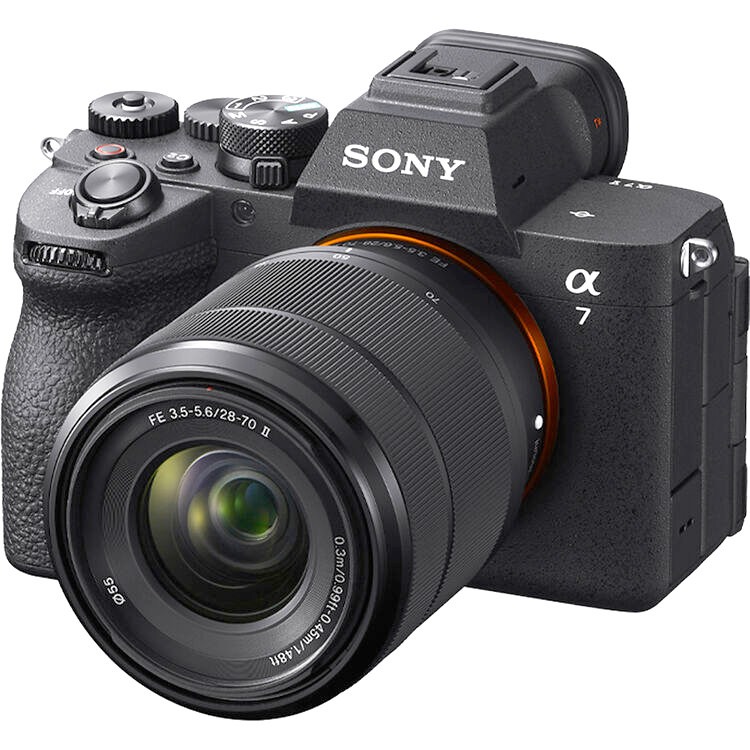
I notice that Sony is touting their most recent camera this way: “Designed with innovations that deliver a significant performance boost across every aspect of imaging.” The claim that’s new here is “across every aspect.” Sony’s marketing department is letting you do the heavy lifting: whatever it is you wanted a boost in is present in the new camera. Sure. But not more pixels. Or a better EVF. (I could go on. ;~). And as usual, Sony’s press materials had 22 footnotes, many trying to explain the details of those boost claims.
The problem, of course, is that the A7 Mark V looks pretty much the same as previous A7’s, so whatever marketing claim you make to get someone to buy one over the A7 Mark IV you’re still selling need to clearly resonate, otherwise the customer will just save the US$400 in price and walk out of the store with the IV.
This is one reason why the camera companies’ marketing departments believe in numbers (30 fps versus 10 fps [with a footnote ;~] in the A7 example). Note what I wrote when the new camera came out: "should you upgrade from the Mark IV model?" If you're a casual photographer who doesn't press their camera to the max, the answer is a fairly clear no.”
You may also have noticed that Nikon didn’t even say anything about the recent ZR camera as regards still photography. All the marketing was about the RED connection, and most specifically about the changes that R3D raw makes. The ZR is indeed the best 6k video camera at under US$4000 (and maybe higher) when used the way Nikon marketed it: 32-bit floating audio with clearly better looking video output that grades easily. But as a still camera? I think Nikon was afraid of saying anything about that because, ostensibly the ZR as a still camera is a Z6III with some features removed. Does that make it bad for photography? Nope. Z6III level imagery is all most people actually need. I’m so convinced that the ZR is a very usable still camera that I’m working on a Conguring and Using the ZR for Still Photography book. So I guess I’ll do Nikon’s marketing job for them.
Time to get to the tip: how do you know the new thing is actually better? The marketing departments of the Japanese companies are not exactly top explainers, so the answer to that question boils down to two things:
- Knowing your needs, understanding your frustrations. Do you need the iterated things? Will they provide a clear benefit that addresses your needs or fixes your frustrations? Maybe, but only you can figure out the answer to that with clear self assessment as well as clear information about the new product. I can help with the latter, but you need to the work on the former.
- Believing the influencers. This is where it gets tough. Those that get early access to products these days tend to be “cheerleaders of the latest.” That’s because of how they get compensated for their time. Some manage to still give you clear, useful, and reliable information instead of hype. You can probably count those in the mirrorless arena with the fingers on your hands. However, know that the camera companies are prioritizing influencer reach over reliability these days. They’d rather give early access to cheerleaders with huge followings than serious assessors with smaller followings.
Yes, I consider myself an “influencer,” though not in the common definition of that term these days. My articles, reviews, and assessments are valued by many, so much so that when I post a detailed review B&H’s sales for that product clearly go up for the next week or two. But I’m hoping that this is because I’ve provided the information you needed to resolve whether the product is going to meet your needs or solve your frustrations.
-------------------
Wrapping Up
And in other news
▶︎ FoCal 5.0. This tool used to automate AF-Fine tuning has just had a complete overhaul, promising faster and more precise results as well as more reliable WiFi and Ethernet connections to the camera being tested. The UI has been tweaked with a new look and a smoother approach, and the reports generated by FoCal have been improved, as well. You also get FoCal Mobile and Snapshots when you have an active FoCal 5.0 product. As many of you know from my earlier writing, Snapshots is one way around the limitations of Nikon’s Save menu settings limitations.
▶︎ OWC Envoy Ultra 8TB. The portable Ultra SSDs have been availalble in 2TB and 4TB sizes for a while, and they are the fastest bus-powered portable drive you can attach via Thunderbolt 5. At CES, OWC announced the 8TB version, which, unfortunately, at US$1700 is two-and-a-half times the price of the 4TB. Still, if you need attached max speed storage on a current MacBook Pro, you might be tempted.
▶︎ macOS Security. I’ve added a section to my article on Macintosh Software (it’s at the end of the article). This is an important subject you should never neglect, as Macs are definitely targets of malware and other malicious threats these days. If you’re the geeky type, you should read this year’s summation of Mac threats. Yes, a lot appeared in 2025. And the most common denominator is that they’re trying to steal information from/about you. And lest you think this isn’t really photographically relevant, I tracked at least two threats to photography Web sites this past year. That’s down from 2024, but still, any site that’s running ads is vulnerable to hidden attacks within the ads.
------------
As you can see, this weekly or bi-weekly "newsletter" style for News/Views can be quite elaborate and lengthy. But by putting everything in one spot less often, in a single format, it saves me time and allows me to spend more time on the commentary than the news itself, which you can get pretty much anywhere.
byThom MAX is still coming, but for the time being I'll be doing news this way. I'll have more about byThom Max when I kick it off later in 2026. In the meantime, if you're interested in subscribing, click here to receive updates.