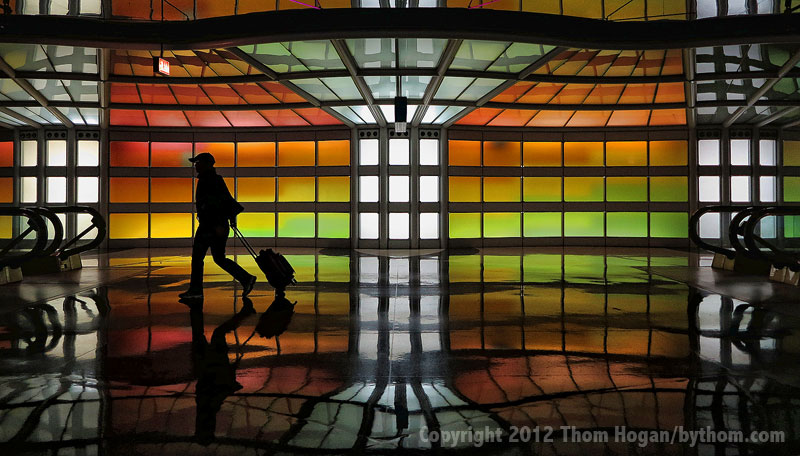
Check the Gear section of this site for reviews of some of the cameras mentioned. For the Nikon Z cameras mentioned, check the zsystemuser.com site for reviews of them.
When I get queries about which camera to purchase, my immediate query back is “what type of photography do you do?” For many photographic genres—e.g. sports, wildlife, event, etc.—the answer to my question immediately starts to narrow things down, and it also speaks to lenses as well as camera.
However, when the response I get is “I’m just looking for something to take pictures with when I travel” an entirely different set of questions come into play, and it’s often difficult to narrow things down without some real careful examination of preferences. That’s because “travel” encompasses just about every photographic discipline, as you can pretty much take any type of image when traveling. Even the narrowest view of that would tend to include scenic (landscape or architecture), street, and probably portraits.
Thus, when someone asks me about a “travel camera,” my thinking goes like this: something that’s versatile, but not an extensive system that needs a big camera bag to carry.
Which brings me to the one of the primary choices you have to make: size. This is the Goldilocks problem, except we’re not all going to come to the same “just right” choice. Some will pick the baby, some the mama, and some the papa. Nevertheless it’s worth starting with size, as how and where you’re traveling will often dictate what you can bring.
- Small — At the shirtpocket size, there aren’t a lot of great versatile camera choices. Small starts with a modern smartphone, as for several years the top-end phones have become reasonable cameras with multiple lens choices.
- Big Pocket — As size increases, so do your chioces. Indeed, in this middle category we see quite a few choices, many of them appearing lately with high-end capabilities.
- Neckable — The minute you’re carrying your camera via a neckstrap (consider a shoulder strap instead), weight starts to become an issue, plus you have to consider how much the camera is sticking out, particularly if you’re traveling in crowded spaces.
I’ll preface my current recommendations by noting that I have cameras that fit all three size categories. Which I travel with depends upon where I’m traveling and how much photography I think I might do. So I haven’t actually chosen a travel camera, but rather a set of three cameras that before every trip I consider which one is best suited.
Small
As I write this, we really only have three current, reasonable choices for shirtpocket travel carry beyond your smartphone: OM TG-7, Ricoh GR IV, and Sony RX100VI. That’s also three different photo and sensor sizes (12mp 1/2.3", 26mp APS-C, and 20mp 1”, respectively). Remarkably, these are three very differentiated cameras, so your choice might boil down to things like whether you take photos in wet environs (OM) or need lens versatility (Sony).
If you’re traveling on a boat or are in or around water a lot, the TG-7 is unbeatable. It’s primary downside is the smaller 12mp image sensor. However, this little wonder has a remarkable deep feature set (including built-in GPS and a built-in flash), takes raw or JPEG images, and is waterproof down to a 20m depth. As with all small cameras, the buttons are tiny. One final drawback: OM never brought this model into their modern menu system, so it still uses the old, brain-taxing Olympus menus. However, when kayaking, snorkeling, or just wandering around in the rain, I’ve never been disappointed with what the camera can do.
While the 20mp and 24-200mm lens on the Sony sounds like “a lot more,” be careful about falling for sheer numbers. I find the RX100VI tends to “resolve” more like a 12-16mp camera (depends a bit on what you’re doing with focal length and aperture). Like the OM, the Sony has an earlier, more confusing menu system, too. But the one big benefit of the Sony in this category is its pop-up EVF. While not particularly great as a viewfinder, it does help in really bright situations.
My current choice in this category is the Ricoh GR IV. It’s a well considered mix of function, features, and performance. The 26mp APS-C sensor and its prime lens is best in this class, too, and clearly so. If you’re a detail freak, this is your choice, as long as you’re happy with the 28mm focal length ;~). If you’re solely into B&W imagery, the monochrome version of this camera is the best bargain for getting the benefits of a non-Bayer sensor in the entire camera industry right now.
Big Pocket
By “big pocket” I mean the larger pocket sizes of a photo vest or most jackets. Being able to stuff a highly capable camera into your pocket and pull it back out when needed makes for a very simple way to get great photos when traveling. Most of the time, this is the type of camera I seek out, and fortunately, there are some superb choices here.
Fujifilm is where most people turn, as the virally-popular X100VI is an amazing combination of features, functions, and performance. The 40mp APS-C sensor coupled with its ~35mm prime lens makes for a more versatile camera than you think, as Fujifilm gives you a quick way to crop to 50mm or 85mm and just get fewer pixels (still more than enough for a 24” print). Strangely, the X100VI has become almost a bargain at its US$1800 price as others have launched cameras into this category that aren’t as good. The one thing I’d caution against is that this is a complex camera that will take a while to get set up for the way you want to use it.
Fujifilm also makes a “larger” option, the 100mp medium format GFX100RF. You need a biggish pocket and a big credit card limit to consider this option, but I prefer it over the X100VI. Why? Because it exposes the things I want to set fast a little better, and that big image sensor generates remarkable raw files that are a joy to run through a converter. But again, it’s bigger, and the lens sticks out way more than on its smaller sibling, so make sure it fits the pocket you wish to carry it in. (It’s also a reasonable “neckable” camera, but you’ll be setting yourself up as a target for thieves flaunting a camera that’s this expensive.
Leica with the D-Lux8 and Panasonic with the L10 make somewhat large m4/3 pocketable cameras (the D-Lux8 is the smaller of the two). The big difference between the two is the UX (user experience), as they come with very different menu systems, feature exposure, customizations, and operating style. The Panasonic is the more conventional of the two, but don’t ignore the Leica; some will find the UX simplification to be about right for a travel camera. Panasonic also has the full frame S9, which straddles this and the next category depending upon which lens you stick on it.
Sony has the RX1 choice, and Leica the Q3. Both provide 60mp full frame at a price. Both are highly competent cameras, but if I’m going to spend that much money, the Fujfilm GFX is my choice.
You might notice that this category has a lot of top end choices. It’s also the category that most photographers gravitate towards, as they’re balancing features/performance with size.
My current choice is probably a surprising one. At somewhere between the two Fujifilm camera sizes, I have a choice of a Nikon ZR or Z5IIC with a pancake lens. Currently, that’s a Z5IIC with the 26mm f/2.8. I’m thus carrying a very competent full frame camera with virtually the same UX and feature set as my big cameras, so moving between my travel camera and my wildlife setup takes exactly no adjustment. Moreover, I can stuff a lens or two into a small bag and alter the type of photography the Z5IIC is best suited for with a twist and a click.
Neckable
The minute you say you’re okay with using a neck strap (or shoulder strap) to carry your travel camera, you pretty much open up your choices to any dedicated camera. However, I’d caution you to consider two things before just looking for the do-all, be-all camera:
- Weight — If it’s hanging from your neck all day, the heavier you camera and lens are the more you’re going to be complaining about it every night. Indeed, you’ll start looking at stuffing it into a bag, and when you do you start missing photo ops. I consider anything over 2 pounds (900g) to be an anvil on your muscles, so be careful here.
- Vulnerability — If you’re walking with your camera out and exposed to the elements, crowds, and rocks, columns, doorways, and more, then you want a combination of two things: toughness and cheapness. Tough because you want it to survive hard knocks and bad weather, cheapness because you don’t want to be advertising wealth and if you do have to replace it, you don’t want to be using your full credit line again.
These two things lead to a competent entry-level camera as opposed to more prosumer or top-end cameras. Think Canon R8 or Nikon Z5II. And with a small, light lens (e.g. nothing bigger than Nikon’s 24-70mm f/4 S). As with my Big Pocket choice, you can always carry another lens or two in a bag, just in case you hit a photographic opportunity that would be better served by a different lens.
My current choice is the Nikon Z50II, and again for same reason as my Big Pocket choice: it gives me the same UX and feature set as my full camera sets for sports and wildlife work, so I’m not learning anything new. The big choice here though is lens. Right now I’m using the 16-50mm f/2.8 VR, which is putting me just over my weight limit. I can always switch to the very small kit lens and be under it, though.
Final Words
No, there isn’t a perfect choice. Moreover, as I noted above, it’s a Goldilocks problem, and your choice very well may turn out to be different than mine. What I hope that you takeaway from this article is the differentiations that will likely move you to a particular choice: size, weight, image competence, UX, durability, price. Once you figure out how you’ll balance those six things, you’ll almost certainly be pointed to a very narrow set of choices, if not a single choice.
Bonus: Don’t count out non-traditional choices. As Insta360 is proving with their options for the Ace Pro action camera, it’s possible to use it more like a traditional camera. Likewise, the gimbal-cameras such as the DJI Osmo Pocket make for an interesting choice for anyone that also does social media video posts. The other benefit of these options is that the smartphone connection for them is better than what the dedicated camera makers are providing.